

The Wallbox Pulsar Max is one of the more popular home EV chargers we install, and it’s easy to see why. It’s compact, reliable, and the app works well. Here’s our honest take on it.
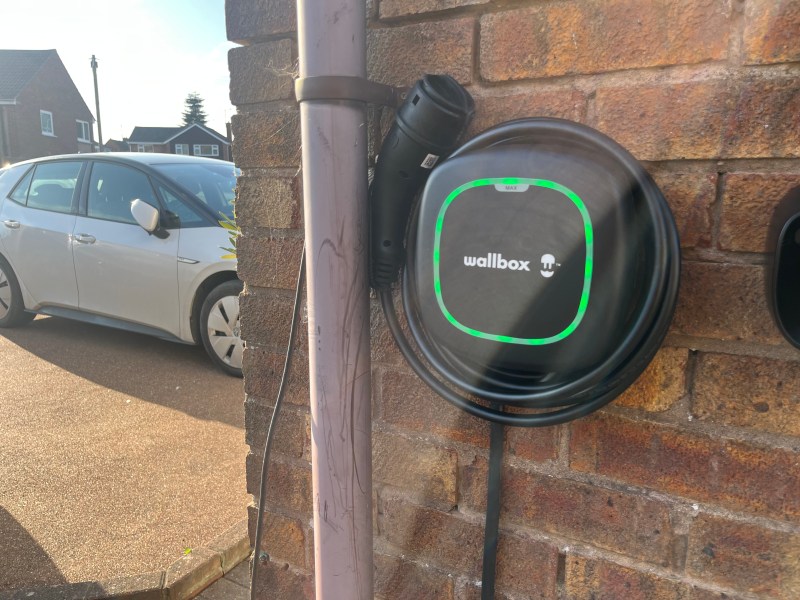
What it does
At 7.4kW on a single-phase supply — the standard for most UK homes — the Pulsar Max gives you around 30 miles of range per hour of charging. That’s enough to top up overnight without any fuss. It connects via Wi-Fi and Bluetooth, so you can control it through the myWallbox app.
The app lets you set charging schedules, monitor energy usage, and lock the charger when it’s not in use. Scheduling is particularly useful if you’re on a time-of-use tariff like Octopus Go — you can set it to charge only during off-peak hours and cut the cost per charge significantly.
It’s rated IP54 and IK10, so it handles outdoor installation in the UK climate without any issues.
Installation
The Pulsar Max works with both single-phase and three-phase supplies and is compatible with all Type 2 EVs. Installation needs to be carried out by a qualified electrician. The unit itself typically costs £500–£800 depending on the retailer. Installation usually runs between £300 and £800 depending on how much cable work is involved.
An optional add-on called Power Boost adjusts the charge rate dynamically based on what else your home is drawing at the time — useful if your consumer unit is running close to capacity.
How it compares to the Zappi
The Pulsar Max doesn’t have solar integration. If you have panels and want to charge your car from your own generation rather than paying grid rates, the Zappi is worth considering instead. But if you want a clean, straightforward home charger at a competitive price — one that does what it needs to do, reliably, without overcomplicating things — the Pulsar Max is a strong choice.
Contact us to get it installed.


